
Table of Contents
- Tallow and Tea vs Craft Tallow: The Core Differences
- Quick Comparison: Tallow Balms and Botanical Teas Side by Side
- The Benefits of Small Batch Skincare and Tea
- How to Choose High Quality Tallow for Your Skin
- Crafting Methods Compared: Whipped Balm vs Infused Tallow
- Pairing Tallow Balms With Fruit Leaf Teas
- Shelf Life and Stability: Keeping Your Tallow and Tea Fresh
- Which One Fits Your Routine? A Simple Decision Guide
- Frequently Asked Questions
Last Updated: September 27, 2026
Tallow and Tea vs Craft Tallow: The Core Differences
Tallow and tea vs craft tallow is not really a fight between two products. It is a question about what you want your daily routine to feel like. We see it as the difference between a single-purpose balm and a whole rhythm of care.
Quick Comparison: Tallow Balms and Botanical Teas Side by Side
Here is the fastest way to see how the two approaches line up.
| Feature | Craft Tallow | Tallow and Tea |
|---|---|---|
| What it covers | Skin only | Skin and a daily tea ritual |
| Products involved | One balm | Balm plus fruit leaf tea |
| Ritual length | A few seconds | A few minutes |
| Best for | Dry, sensitive skin | Skin care plus a daily cup of tea |
| Routine fit | Any time | Morning or after meals |
| Typical spend | Lower | Slightly higher |
The Benefits of Small Batch Skincare and Tea
Small batch production keeps things fresh, traceable, and simple. That is the whole point. Ingredients do not sit in a warehouse for months before they reach you.

Why Small Batches Keep Tallow Fresh
Tallow is a rendered fat. Like any fat, it can go stale over time when exposed to heat, light, and air. Small batches shorten the gap between making and using.
A few practical wins:
- Less time in storage means less exposure to oxidation
- Shorter runs mean closer attention to each jar
- Traceable sourcing is easier to maintain at small scale
What Small-Batch Tea Means for Daily Wellness
Loose leaf tea behaves the same way. Whole leaves hold their character longer than crushed dust in a mass-market bag.

How to Choose High Quality Tallow for Your Skin
Start with the label. It tells you more than any front-of-jar claim. A good tallow balm names its source. It names its cut. It names every added ingredient.
Look for these markers:
- Grass-fed sourcing, stated plainly
- Kidney suet rather than generic "beef fat"
- Short ingredient list you can pronounce
- No synthetic fragrance or fillers
- Small-batch language backed by real detail
Reading the Label: Suet, Rendered Fat, and Grass-Fed Sourcing
Suet is the hard fat around the kidneys. It is prized because it is firmer and cleaner than fat from other cuts. Rendered fat is simply suet that has been gently melted. It is strained into a usable form.
Crafting Methods Compared: Whipped Balm vs Infused Tallow
A balm that sinks in within a minute instead of sitting on top of your skin is not an accident. It comes down to three separate steps. Most brands only talk about one of them.
Rendering First: Wet vs Dry
Rendering is how raw suet becomes a clean, usable fat. People have done this over a low fire for generations. They skim and strain until the fat runs clear. Modern small-batch makers still follow that same slow rhythm. There are two ways to do it. They produce different balms.
| Step | What Happens | What You Feel |
|---|---|---|
| Dry render | Fat melts in its own liquid | Faster to make, heavier feel, shorter life |
| Wet render | Fat simmers with water, then separates | Cleaner fat, lighter feel, longer life |
| Infuse | Botanical steeps in warm fat, then strains | Natural scent and color |
| Whip | Air folds through cooled fat | Light, fluffy, spreads like a cloud |
Infusing: Getting Scent Into the Fat
Infusing is the step that turns plain tallow into something you look forward to opening. The fat is warmed gently with a botanical. It is held low, then strained. Vanilla bean is a common choice. Its aroma is fat-soluble. It moves fully into the tallow.
Whipping: Texture You Can Feel
Whipping is the last step and the most visible. Cooled tallow is blended at speed until air folds through it. The result is light, fluffy. It is easy to spread. It melts on contact instead of dragging across skin.
Pairing Tallow Balms With Fruit Leaf Teas
The pairing is simple: caring for your skin and enjoying a daily cup are two parts of the same daily rhythm.
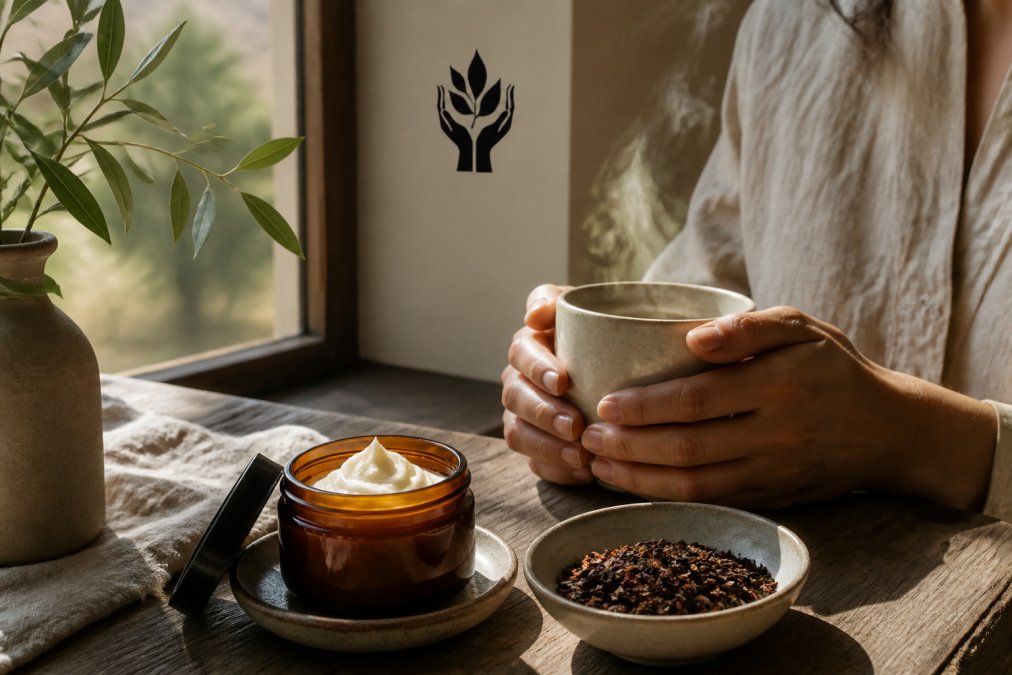
A practical pairing:
- Morning: a cup of Balance tea alongside your breakfast
- Evening: warm a small amount of balm between your fingertips and press it into your skin
Shelf Life and Stability: Keeping Your Tallow and Tea Fresh
A jar of tallow that still smells clean a year after you opened it is not luck. It is the result of how the fat was rendered. It is how it was stored. It is how you handle it each time you dip in.
How Long Tallow Balm Actually Lasts
A well-made whipped tallow balm typically stays fresh for 12 to 18 months unopened. It lasts about 6 to 12 months once you start using it. The range depends on three things: how the fat was rendered, whether vitamin E was added, and how clean your hands are when you scoop.
Signs it is still good:
- A clean, faintly fatty scent
- Soft texture that melts between your fingers.
- No color shift toward yellow or brown.
Signs it has turned:
- A sharp, sour, or crayon-like smell.
- A grainy or tacky texture that no longer whips smooth.
- A darker color than when you bought it.
Storage That Actually Extends Life
For tallow balms:
- Keep the lid sealed and store in a cool, dark cabinet
- Refrigerate for 15 to 20 minutes if it softens in warm weather, then return it to the cabinet
- Never let water into the jar, water is the fastest route to spoilage in any fat
- Scoop with clean, dry hands or a small spoon
For loose leaf tea:
- Keep it in an airtight container away from sunlight and strong smells.
- Scoop with a dry spoon only.
- Whole leaves hold their character longer than crushed dust. Small-batch loose leaf tends to stay fresh longer than mass-market bags.
- Aim to finish a tin within 6 to 12 months of opening for the fullest flavor.
A Simple Stability Check
You do not need a lab to know if your tallow is still good. Smell it first. A clean, faintly fatty scent is normal. A sharp or sour smell means it has turned. Then rub a small amount between your fingers. If it melts smoothly and absorbs, it is fine. If it feels tacky or sits on top of your skin, it has oxidized.
Which One Fits Your Routine? A Simple Decision Guide
Choose based on what your routine is missing, not on which sounds better. Both approaches are good. They simply serve different needs.
Pick craft tallow alone if:
- Dry or sensitive skin is your main concern
- You want one product and no extra steps
- You prefer the simplest possible routine
Pick tallow and tea together if:
- You want skin care and a daily cup of tea in one rhythm
- You already enjoy a daily cup of tea
- You like routines that feel intentional rather than rushed
Frequently Asked Questions
What are the primary differences between botanical-infused tallow and standard craft tallow?
Standard craft tallow is usually just rendered fat, sometimes whipped for texture. Botanical-infused tallow starts with that same base, then adds plant oils or essential oils for scent and skin feel. A whipped balm like the Frankincense Whipped Tallow Balm blends grass fed beef kidney suet tallow with organic apricot kernel oil and frankincense essential oil. The result is a balm that spreads easily, carries a natural scent, and still delivers the moisturizing properties tallow is known for.
Why is small-batch production important for tallow skincare?
Small batches mean the tallow is rendered, whipped, and jarred in smaller amounts, so less sits in storage before it reaches you. That matters because tallow is a rendered fat, and fats can go rancid over time when exposed to heat or air. Smaller runs also let makers check texture and scent profile jar by jar. The benefits of small batch skincare show up in how fresh the balm feels on your skin and how well it holds its whipped texture.
What should I look for when choosing between different tallow brands?
Start with the source. Look for grass-fed beef suet, ideally kidney suet, since it is the purest cut. Check whether the tallow is deodorized; a subtle natural aroma is a sign it was not stripped down. Then read the full ingredient list. A short list of recognizable ingredients, like tallow, apricot kernel oil, vitamin E, and essential oil, tells you more than a long one. Learning how to choose high quality tallow comes down to sourcing, ingredient transparency, and batch size.
How does intentional sourcing impact the quality of tallow skincare?
Where the fat comes from shapes what ends up in the jar. Grass-fed suet from pasture-raised cattle tends to carry a richer fatty acid profile and more of the fat-soluble vitamins A, D, E, and K. Traceable sourcing also means the maker knows the farm and the rendering process. That traceability is why small-batch makers often name the cut and the animal, not just say beef tallow on the label.
How does tallow balm feel on the skin?
Tallow naturally contains vitamins A, D, E, and K and fatty acids. People like it because it feels rich and nourishing. Used daily as part of a gentle routine, a whipped tallow balm can leave skin feeling softer and well moisturized.
Building a routine that actually lasts is harder than finding a single good product. Present Body Co makes it simpler by pairing small-batch tallow skincare with botanical fruit leaf teas, so your skin care and your daily cup fit together. Start with a whipped tallow balm and one tea blend, and let the ritual grow from there.
USDA guidance on grass-fed livestock labeling
FDA guidance on cosmetic labeling and ingredient disclosure