
Table of Contents
- Is Tallow Skincare Worth Trying? The Honest Answer
- Why People Like Tallow for Skin
- Is Tallow Comedogenic? What Oily Skin Needs to Know
- Tallow vs. Plant-Based Oils: Which One Wins for Your Skin?
- How to Use Tallow Balm: A Simple Ritual for Face and Body
- Scent, Texture, and Shelf Life: What Nobody Tells You
- Safety, Side Effects, and Who Should Skip Tallow
- Conclusion: Is Tallow Skincare Worth It for You?
- Frequently Asked Questions
Last Updated: October 4, 2026
Is Tallow Skincare Worth Trying? The Honest Answer
For many people, yes, especially those with dry skin who want a rich, simple moisturizer. Tallow skincare is made from rendered beef fat, and many people love how it feels: rich, soft, and comforting.
People have reached for tallow for generations, long before the first lotion bottle existed. This honest review from Present Body Co walks through what tallow is, who it suits, and how to use it.
The short answer: tallow skincare suits people who want a rich moisturizer for dry or mature skin. Below, we cover why people like it, the pore-clogging question, and how to use it well.
Why People Like Tallow for Skin
The main draw is rich, lasting moisture. Tallow is a dense balm that leaves dry skin feeling soft and moisturized.
An emollient balm like tallow sits on the surface of the skin, so dry skin feels moisturized and comfortable.
Vitamins A, D, E, and K in Every Jar
Grass-fed tallow naturally contains vitamins A, D, E, and K. These are the same vitamins many conventional formulas add in synthetic form.
Emollient and Occlusive: How Tallow Feels
Tallow is both emollient and occlusive. It softens skin and forms a light seal that helps hold moisture in. For dry skin, that combination is the whole point.
Is Tallow Comedogenic? What Oily Skin Needs to Know
Tallow can suit many faces, but it helps to understand how it behaves on your skin. Tallow carries a moderate comedogenic rating, usually listed around 2 on the standard 0-to-5 scale. That number alone does not tell you whether it will clog your pores. The fatty acid profile and your own sebum chemistry matter far more.
Here is the part most articles skip. Tallow is roughly half saturated fat, with stearic and palmitic acids doing most of that work. The rest is a mix of oleic acid and a smaller share of linoleic acid. Human sebum is built from a similar cast.
The catch is oleic acid. It is richer and slower to absorb, and on some skin it can feel heavy and lead to clogged pores. If your skin already produces a lot of oil, adding more oleic-heavy fat can feel like too much. If your skin is dry, that same richness feels comforting.
A simple way to think about it: the more your skin leans oily, the more you want a lighter, linoleic-forward oil. The more your skin leans dry, the more you may enjoy tallow's richness.
If your skin is oily or clogs easily, here is a patch test that tells you something useful:
- Choose one small area, like the jawline or the side of your chin.
- Apply a thin layer at night, only there.
- Skip actives on that patch so you can read the result clearly.
- Watch for two full weeks, since congestion builds slowly.
- Note whether you see any small bumps or clogged pores.
Very oily skin often does better with a lighter oil or a thinner layer of balm.
One more thing worth knowing: tallow is a moisturizer, nothing more. If something about your skin worries you, a dermatologist is the right call.
Tallow vs. Plant-Based Oils: Which One Wins for Your Skin?
Tallow wins for richness and lasting moisture. Plant oils win for lightness and variety. The right choice depends on your skin, not on which one is trending.
Plant oils fall into two camps. Oils high in linoleic acid, like rosehip and grapeseed, feel light and suit oily skin. Oils high in oleic acid, like olive and almond, feel richer and suit dry skin.
Tallow sits closer to the richer end. Its fatty acids, including stearic and oleic acid, give it a dense, buttery feel. A plant oil can do a similar job, but few match tallow's rich, balm-like texture.
| Option | Feel | Best For | Watch Out For |
|---|---|---|---|
| Tallow balm | Rich, melts in | Dry, sensitive, mature skin | Can feel heavy on oily skin |
| Linoleic plant oils | Light, fast | Oily skin | May need reapplying |
| Oleic plant oils | Rich, slow | Dry skin, body use | Can feel greasy |
How to Use Tallow Balm: A Simple Ritual for Face and Body
Using tallow balm takes seconds, and the ritual matters as much as the result. Warm a small amount between your fingertips, then press it gently into damp skin. A little goes a long way.


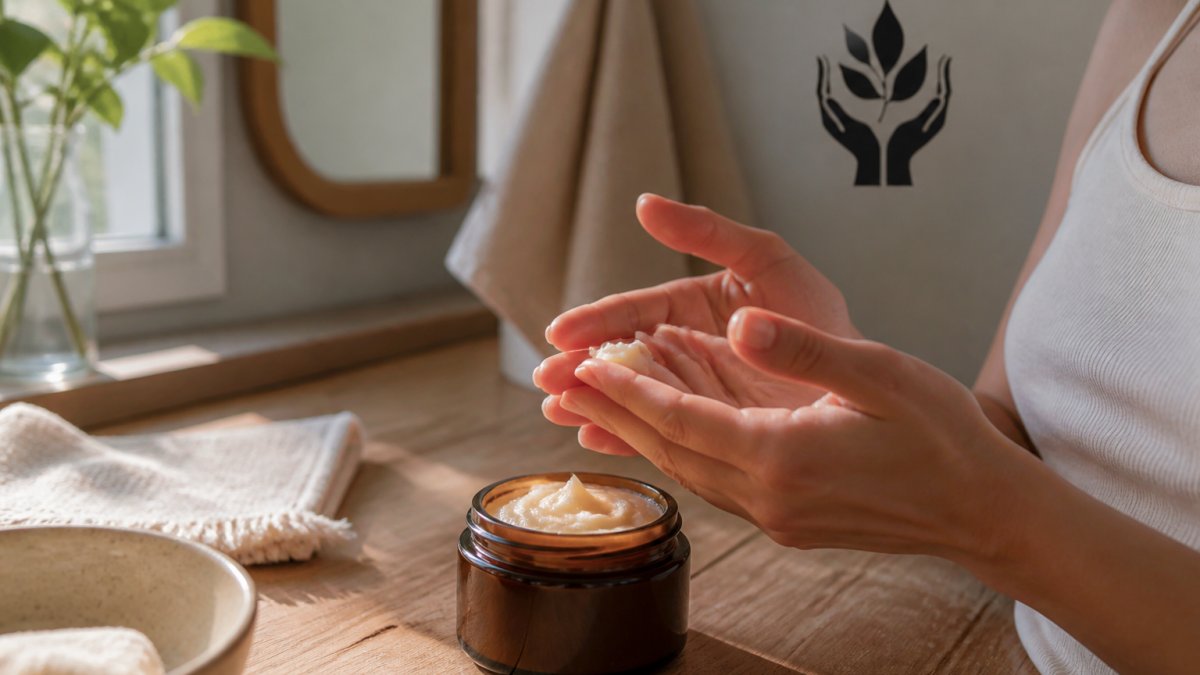
The steps are simple:
- Cleanse and leave skin slightly damp
- Warm a pea-sized amount between fingertips
- Press, do not rub, into face, hands, and dry patches
- Use morning and night, or as needed
- Store the jar cool and dry
Our whipped tallow balms are made for exactly this pause. The Lavender Whipped Tallow Balm blends grass-fed tallow with organic apricot kernel oil for a soft, grounding scent. If you prefer something warmer, the Vanilla Whipped Tallow Balm carries a gentle vanilla note from real vanilla bean.
Scent, Texture, and Shelf Life: What Nobody Tells You
A balm you actually reach for is one that smells good, feels right, and stays fresh.
Real tallow has a faint natural aroma. Some people describe it as slightly beefy or waxy. That scent is a sign of purity, not spoilage. Our tallow is never deodorized, so a subtle note may come through beneath the essential oils.
Texture shifts with temperature, and that is normal. Tallow softens in warmth and firms when cool. If your balm feels too soft or grainy, refrigerate it for 15 to 20 minutes to bring back the whipped texture. In summer, a cooler cupboard keeps it scoopable. In winter, a few seconds between your palms is usually enough.
Shelf life is where honesty matters most. Oxidation is the real enemy. When fat meets air, light, and heat, it slowly turns rancid. You will know it by a sharp, crayon-like smell and a tacky feel. Vitamin E oil in our formulas helps slow that process, but it does not stop it.
A few habits stretch a jar a long way:
- Keep it cool, dry, and out of direct sunlight.
- Use a clean, dry finger or a small spatula, never wet hands.
- Close the lid fully after every use.
- Store it in a cupboard, not on the bathroom shelf.
- Expect a fresh jar to stay at its best for several months when stored well.
There is a small ritual in this, too. The few seconds it takes to scoop with clean hands, warm the balm between your palms, and press it into damp skin is a pause. It is the same pause people have taken with rendered fats for generations, long before skincare came in tubes.
If your jar ever smells sharp or feels sticky rather than smooth, trust your nose and start fresh.
Safety, Side Effects, and Who Should Skip Tallow
Tallow is generally well tolerated, but it is not for everyone. The most common issue is congestion on very oily skin. A patch test before full use is the simplest safeguard.
Anyone with a known allergy to beef products should skip tallow entirely. Our balms contain essential oils, and we recommend a patch test and avoiding use on broken skin.
If your skin is very sensitive, introduce any new balm slowly.
Conclusion: Is Tallow Skincare Worth It for You?
If your skin is dry, sensitive, or mature, tallow skincare is worth trying. It feels rich and moisturizing, and it skips the fillers and synthetic fragrance many people want to avoid.
If your skin is very oily, it may not be your best match. That is an honest limit, not a flaw.
At Present Body Co, we make small-batch tallow balms from grass-fed beef kidney suet and organic apricot kernel oil. No fillers, no synthetic fragrance, just real ingredients. Each jar is a small return to tradition, and a few seconds of care in your day.
Frequently Asked Questions
Why are some skincare experts cautious about tallow?
Some hesitate because tallow is an animal-derived occlusive, and they prefer ingredients with a longer track record in modern formulas. Many people with dry skin simply love how it feels. Patch testing is key.
Is tallow comedogenic?
Tallow typically scores around 2 on the comedogenic rating scale. This means it has moderate pore-clogging potential. If your skin is oily or clogs easily, start with a thin layer on one area. Watch for congestion over two weeks. Many people with dry or balanced skin use tallow without issues. Oily skin types should proceed slowly.
What are the negative effects of tallow on skin?
The most common complaints are clogged pores and irritation from added essential oils. Tallow is never deodorized in small-batch products. A subtle natural aroma may be present. People with very oily skin may find it too heavy. Always patch test on your inner arm for 24 hours. Avoid using it on broken skin.
How long before I know if I like tallow balm?
You will usually know within a few days of regular use whether you like how it feels. Tallow is not an exfoliant or a retinol. Think of it as a rich moisturizer, best paired with a simple routine.
Is tallow suitable for all skin types, including sensitive skin?
Tallow is a popular choice for dry and mature skin. If your skin is sensitive, choose a gently scented option and patch test first. Oily skin types can still use tallow. A lighter application and a watchful eye for congestion are wise.
Dry skin deserves a moisturizer that feels good to use. Present Body Co makes small-batch whipped tallow balms from grass-fed beef kidney suet and organic apricot kernel oil, with no fillers and no synthetic fragrance. Choose from Frankincense, Lavender, or Vanilla, each in a 4 oz amber glass jar. Get started with Present Body Co and give your skin rich, simple moisture.