
Table of Contents
- Why Grass Fed Beef Tallow Is Returning to Modern Skincare
- Tallow Skincare Benefits: What This Traditional Ingredient Offers
- How to Use Beef Tallow on Skin: A Simple Daily Ritual
- Grass Fed Tallow Sourcing: What to Look For
- The Story of Tallow: From Ancestral Kitchens to Skincare Jars
- Choosing Your Grass Fed Beef Tallow Skincare
- Conclusion: A Return to Simple, Intentional Care
- Frequently Asked Questions
Last Updated: October 15, 2026
Why Grass Fed Beef Tallow Is Returning to Modern Skincare
Grass fed beef tallow is rendered beef fat from cattle raised on pasture, and it has become one of the most talked-about ingredients in simple skincare. This guide from Present Body Co explores why the ingredient feels so at home in a jar again.
For generations, families kept a tin of rendered fat near the stove. It cooked food. It softened hands. It was never called a trend.
Then drugstore shelves filled up with lotions and long ingredient lists. Tallow quietly disappeared from the bathroom.
Now it is back. Small-batch makers are rendering it again, and people with sensitive-feeling skin are reaching for it. The reason is simple: they want to know what they are putting on their bodies.
Below, we explain what tallow offers, how to use it, and how to spot a quality jar.
Tallow Skincare Benefits: What This Traditional Ingredient Offers
Tallow skincare benefits come down to three things: a short ingredient list, a rich texture, and the way it makes skin feel. Tallow is a traditional cooking fat that doubles as a moisturizing balm. It softens on contact and leaves skin feeling comfortable.
A Simple, Nourishing Ingredient List
Most tallow balms contain only a handful of ingredients. A typical jar might hold grass fed beef kidney suet tallow, apricot kernel oil, vitamin E oil, and arrowroot powder. That is the whole list.
Tallow itself is rich in fat-soluble vitamins A, D, E, and K. Those vitamins occur naturally in the fat.
How Tallow Feels on the Skin
Warm a small amount between your fingertips. It melts fast. Then it presses into skin and settles without a heavy film.
The finish is soft, not slick. Some balms add arrowroot powder for a silky, non-greasy feel. Others skip fragrance entirely for the purest possible version. Either way, a little goes a long way.
How to Use Beef Tallow on Skin: A Simple Daily Ritual
Learning how to use beef tallow on skin takes about a minute. Warm a pea-sized amount between clean fingertips, press it gently into damp skin, and let it settle. That is the entire method.
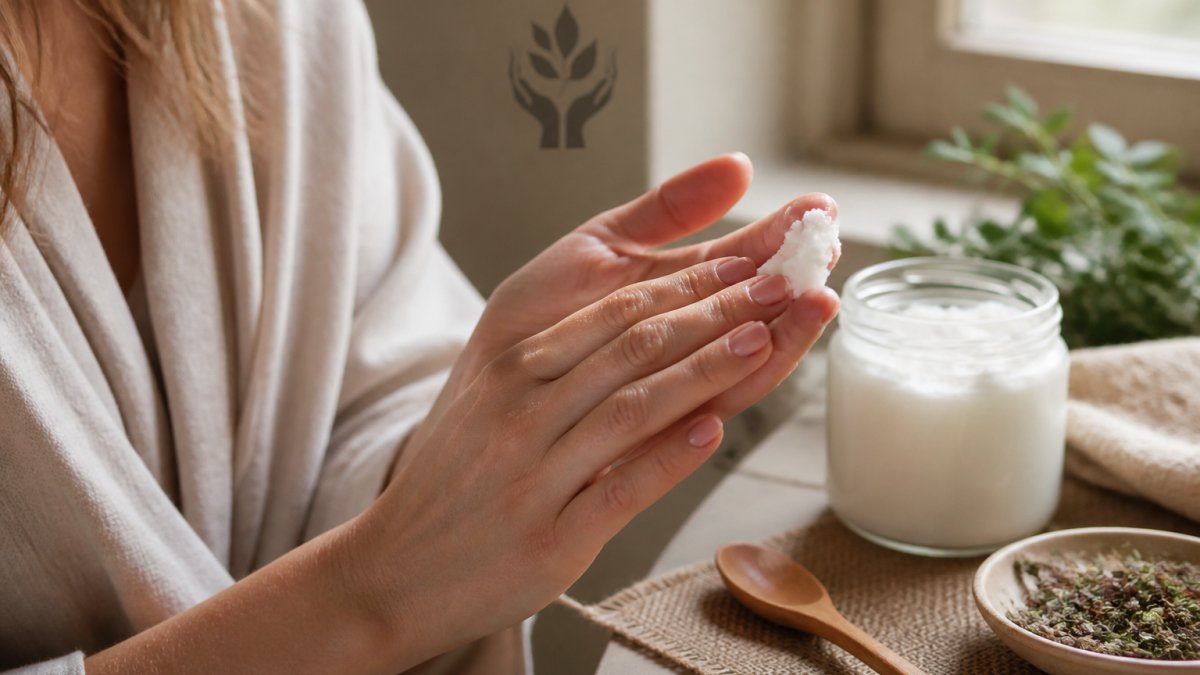
The order matters more than the amount. Apply after a shower, while skin is still slightly damp, so the balm seals in that moisture.
A Warm Balm for Face and Hands
Take a small scoop and warm it between your palms. Press it into cheeks, hands, elbows, and lips. Nighttime suits a richer layer. Morning suits a lighter one.
A Gentle Polish for the Body
Once or twice a week, swap the balm for a tallow sugar scrub. Wet skin with warm water, massage in circles for two to three minutes, and focus on heels and rough patches. Rinse and pat dry.

A quick look at how the pieces fit together:
| Product | Texture | Best For | Frequency |
|---|---|---|---|
| Whipped tallow balm | Soft, melts on contact | Face, hands, lips | Daily |
| Tallow sugar scrub | Grainy, polishing | Feet, elbows, body | 2-3 times weekly |
Grass Fed Tallow Sourcing: What to Look For
Grass fed tallow sourcing starts with one question: can the maker tell you where the fat came from? A short, traceable supply chain matters more than any label claim.
Suet vs. Trim: Why the Cut Matters
Not all beef fat is the same. The two main types are suet and trim.
Suet is the hard, crumbly fat that surrounds the kidneys and loins. It has a higher melting point, a cleaner texture, and a milder aroma. When rendered, suet produces a firm, white, almost odorless tallow. This is the gold standard for skincare.
Trim fat comes from muscle cuts and the outer carcass. It is softer, yellower, and carries a stronger beef scent. Rendered trim makes a perfectly good cooking fat, but it is less ideal for a balm you plan to wear on your face.
A quality skincare jar should specify kidney suet or leaf fat on the label. If it just says "beef fat," you do not know what you are getting.
How Rendering Affects Quality
Rendering is the process of melting fat away from connective tissue and water. The method matters.
Wet rendering uses water or steam to gently melt the fat. It takes longer but keeps the temperature lower, which preserves the fat's natural color and mild scent. Small-batch skincare makers usually prefer this method.
Dry rendering applies direct heat without water. It is faster and common in industrial food production, but higher temperatures can darken the fat and intensify the aroma.
A well-rendered tallow is white to pale cream, firm at room temperature, and nearly scentless. If a jar smells strongly of beef, the fat was likely rendered hot or from mixed trim.
What to Look For on the Label
Look for these markers on the jar:
- Grass fed or grass-finished suet. Kidney suet is the prized cut, firm and clean.
- A short ingredient list. Four or five recognizable ingredients beat twenty.
- No synthetic fragrance. Natural essential oils or nothing at all.
- Small batches. Made to order usually means fresher product.
- Non-GMO and pesticide-free sourcing. Ask how the cattle were raised.
Terms like non-GMO, hormone-free, and antibiotic-free appear on good labels.
A Note on DIY Rendering
Some people render their own suet at home. The process is simple but slow: chop cold suet into small pieces, warm it gently in a heavy pot over the lowest heat, and let the fat melt away from the tissue. Strain through cheesecloth, cool, and store in the refrigerator. The result is a pure, mild tallow you can use in the kitchen or in a simple balm.
If you would rather skip the stove, look for a maker who describes their rendering method. That detail tells you how much care went into the jar.
The Story of Tallow: From Ancestral Kitchens to Skincare Jars
Rendered beef fat is older than any skincare aisle. Families in cold climates kept it in crocks for cooking, candles, and salves. Nothing was wasted.
A Staple in Every Kitchen
For centuries, tallow was not a specialty item. It was what people had. A farm that raised cattle for meat also had fat, and that fat had many uses.
In the kitchen, tallow fried potatoes, sealed confit, and made pastry flaky. In the workshop, it conditioned leather and lubricated tools. In the home, it became candles that burned slow and steady. And in a small tin by the washbasin, it softened wind-chapped hands and cracked heels.
The fat was rendered in batches, usually in autumn after the harvest. The whole process took a day. The result was a year's supply of white, firm tallow stored in a cool cellar.
The Shift Away from Animal Fats
In the mid-twentieth century, shelves changed. Vegetable shortenings and seed oils promised convenience and a neutral taste. They were cheap, shelf-stable, and heavily marketed.
Animal fats like tallow became old-fashioned. Home rendering faded. By the 1980s, a jar of beef fat was a rarity in most kitchens.
The Quiet Return
The revival started small. Home cooks rediscovered tallow for frying. Then small-batch makers began rendering suet for balms and soaps. People with sensitive-feeling skin wanted short ingredient lists and recognizable sources.
That is the pattern now: fewer jars, simpler labels, and ingredients a grandmother would recognize. Tallow fits all three.
There is a quiet ritual in it too. Warming a balm between your palms slows you down. It turns a two-second habit into a small, intentional moment.
Choosing Your Grass Fed Beef Tallow Skincare
Start with the simplest jar you can find. If skin is reactive or you prefer no scent, an unscented whipped tallow balm is the cleanest place to begin. It contains four ingredients and nothing hidden.

For a softer, grounding scent, a lavender whipped tallow balm adds pure lavender essential oil to the same tallow and apricot kernel base. It suits a wind-down routine.
If you want a weekly polish, a floral tallow sugar scrub pairs organic cane sugar with rose, geranium, and lavender. A citrus version uses lemon, orange, and bergamot for a brighter feel.
Present Body Co makes each of these in small batches from real, traceable ingredients. Every jar is made to order and ships within one to five business days.
A note on sensitive skin: patch test any new balm on a small area first. Tallow is never deodorized, so a subtle natural aroma may be present. That is a sign of a pure product, not a flaw.
Conclusion: A Return to Simple, Intentional Care
The case for grass fed beef tallow is not complicated. It is a short ingredient list, a rich texture, and a tradition that predates the modern shelf. It softens skin, it smells like nothing or like lavender, and it asks for about a minute of your day.
Choosing well comes down to sourcing. Ask where the fat came from, read the label, and start with one simple jar. If you are pregnant, nursing, take medication, or have a health condition, check with your doctor before trying a new skincare product.
Frequently Asked Questions
What does high-quality grass fed beef tallow feel like on the skin?
A well-made grass fed beef tallow balm feels rich but not heavy. It melts quickly at body temperature and presses into the skin without a greasy film. The texture is often described as velvety or like softened butter. Our whipped tallow balms use organic arrowroot powder for a silky, non-greasy finish. A little goes a long way. Warm a small amount between your fingertips, then press gently into your face, hands, or any dry patches.
How do I know if a tallow skincare product is sourced well?
Look for clear language about the source. Grass fed tallow sourcing should tell you what part of the animal the fat comes from and how the animals were raised. Kidney suet is the purest cut, prized for its clean texture. The label should also list every ingredient. At Present Body Co, our balms use 100% grass fed beef kidney suet tallow and organic apricot kernel oil, with no synthetic fragrance or fillers.
Can I use tallow skincare if I have sensitive skin?
Many people with sensitive-feeling skin choose tallow because the ingredient list is short and simple. Our Unscented Whipped Tallow Balm has just four ingredients: grass fed beef tallow, organic apricot kernel oil, vitamin E oil, and organic arrowroot powder. No fragrance, no essential oils. If you are trying tallow for the first time, patch test on a small area first. If you have a health condition, check with your doctor before starting a new skincare routine.
What makes grass fed beef tallow different from other cooking fats and skincare ingredients?
In skincare, grass fed beef tallow offers a rich, moisturizing feel and contains fat-soluble vitamins A, D, E, and K. Unlike many seed oils, tallow is a traditional cooking fat with a long history in ancestral kitchens. For skincare, look for tallow that is never deodorized, as the natural aroma is a sign of a pure product.