
Table of Contents
- Why Your Skin Reacts: Triggers Beyond Products
- Best Ingredients for Sensitive Skin That Actually Soothe
- Ingredients to Avoid: The Hidden Irritants in 'Natural' Labels
- How to Build a Skincare Routine for Sensitive Skin
- Natural Skincare for Sensitive Skin: What the Research Shows
- Our Top Picks: Fragrance-Free Tallow Balms for Reactive Skin
- Quick Comparison: Which Balm Matches Your Skin's Needs?
- Common Mistakes That Worsen Sensitive Skin
- Frequently Asked Questions
Last Updated: September 9, 2026
Finding a truly gentle skincare for sensitive skin often feels like endless trial and error. Many products labeled "natural" still contain hidden irritants. This guide from Present Body Co breaks down what causes those reactions and how to build a routine that calms rather than aggravates.
The core of gentle skincare for sensitive skin is understanding that less is often more: focus on supporting your skin's natural barrier with a few trusted, simple components.
Why Your Skin Reacts: Triggers Beyond Products
Most people assume their skin reacts only to what they put on it, but the reality is more complex. The skin is a dynamic organ in constant dialogue with your environment. When that dialogue turns into an argument, you see it as redness, stinging, or flaking.
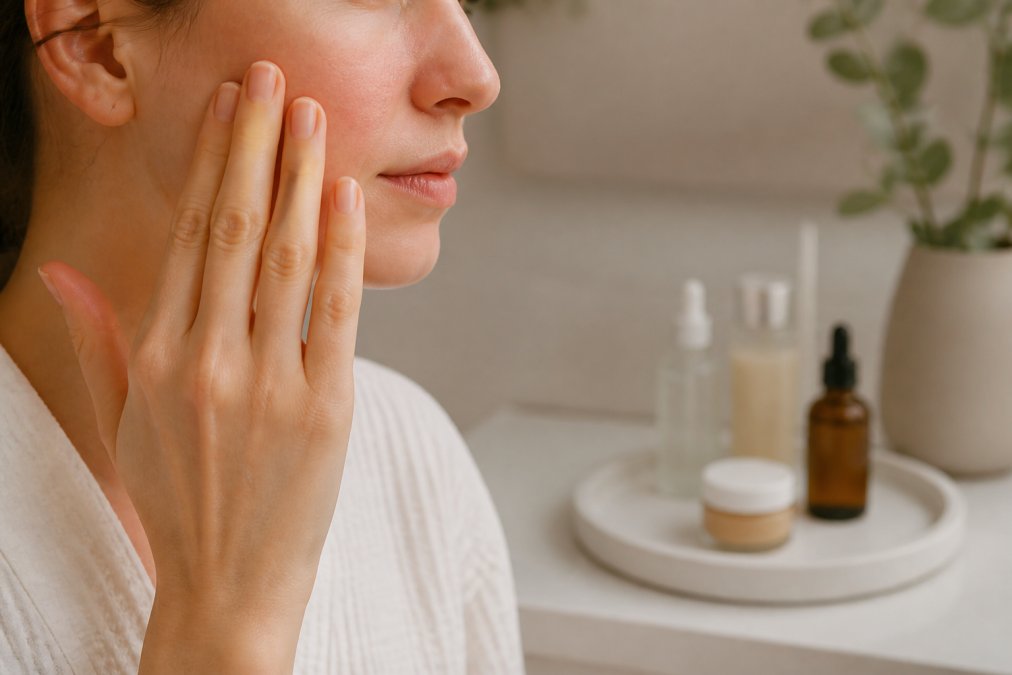
The Barrier Breakdown: More Than Just a Metaphor
Your skin's outermost layer, the stratum corneum, is often described as a brick-and-mortar wall: the 'bricks' are dead skin cells, and the 'mortar' is a complex mixture of lipids, primarily ceramides, cholesterol, and free fatty acids, that keeps water in and irritants out. When this lipid matrix is compromised, you experience an increase in transepidermal water loss (TEWL).
A rise in TEWL is not just about dryness; it is a physical gap in your defense system. With the barrier weakened, external triggers can penetrate more easily and contact living cells below, triggering an immune response that causes redness, swelling, and burning.
The Water You Wash With: A Silent Saboteur
A common mistake is overlooking your cleansing water. The U.S. Geological Survey reports that more than 85% of American homes have hard water, high in dissolved calcium and magnesium. These minerals react with fatty acids in cleansers to form a sticky residue, 'soap scum', that is difficult to rinse off and can clog pores.
A 2016 study in the Journal of Investigative Dermatology found that hard water increases the skin's sensitivity to sodium lauryl sulfate (SLS), increasing TEWL and disrupting the barrier more than either alone. If you live in a hard water area, switching to a gentle micellar water or using a filtered splash for the final rinse can help.

The Fabric Factor: What Your Pillowcase Is Doing All Night
Pay attention to your laundry detergent and fabric softener. Standard detergents are not always fully rinsed out of fabrics, and the residue on your pillowcase is pressed against your face for eight hours. Fabric softeners are often worse, coating fibers with quaternary ammonium compounds (quats), known contact allergens for some people.
For sensitive skin, a fragrance-free, dye-free liquid detergent for baby clothes is safer. Add an extra rinse cycle to remove more residue, and consider a silk or high-thread-count cotton pillowcase, which is less likely to cause friction-induced micro-tears.
The Stress-Skin Axis: A Direct Line
Stress and lack of sleep have a direct physiological impact on your skin. When stressed, your body releases cortisol, which increases sebum production and impairs the skin's ability to repair its barrier. A 2014 UCSF study found that stress management improved the skin's barrier recovery rate after a controlled injury.
Chronic stress keeps cortisol high, so your skin constantly fights to maintain its lipid matrix, which is why flare-ups often follow high-pressure weeks. Managing stress is a functional part of your skin's repair process.
Best Ingredients for Sensitive Skin That Actually Soothe
The best ingredients for sensitive skin mimic or support your skin's own structure rather than forcing change. Look for products built around lipid replenishment and soothing agents. Ceramides, niacinamide, and glycerin are well-documented for supporting the skin barrier, but for those seeking a more ancestral approach, there is a surprising standout.
The Core Repair Kit: Ceramides, Niacinamide, and Glycerin
Ceramides are the workhorses of the lipid matrix, making up about 50% of the skin's barrier lipids. There are nine different types in human skin, and products with a 'ceramide complex' (Ceramide NP, AP, or EOP) mimic this natural ratio. Applied topically, they slot into the damaged barrier, reducing TEWL and preventing irritants from penetrating.
Niacinamide (vitamin B3) is generally well-tolerated. At 2% to 5%, it increases ceramide and free fatty acid production and has anti-inflammatory properties. However, high concentrations (10% or more) can cause flushing or stinging. If new to niacinamide, start with a low percentage and use it every other day.
Glycerin is the most effective humectant in skincare. It draws water into the stratum corneum and works within the barrier to keep it hydrated. A 2016 study in the Journal of Cosmetic Dermatology found glycerin more effective than hyaluronic acid at improving hydration and reducing TEWL. It is also cheap, making it a staple in both drugstore and high-end formulations.
The Anti-Inflammatory Botanicals: Calendula, Chamomile, and Allantoin
Certain botanicals excel at calming active inflammation. Calendula (Calendula officinalis) has been used in traditional skincare for generations. Its active compounds, including triterpenoids and flavonoids, have demonstrated anti-inflammatory properties. A 2017 review in the Journal of Clinical and Aesthetic Dermatology noted that topical calendula can soothe irritated tissue and support the look of redness reduction.
Chamomile (Matricaria recutita) is another time-honored choice. Its primary active compound, bisabolol, has documented anti-inflammatory and anti-microbial properties. However, the source matters: chamomile essential oil can be a sensitizer, while a chamomile extract or infused oil is generally safer.
Allantoin is a less glamorous but highly effective compound. A botanical extract (often from comfrey), it promotes cell proliferation and wound healing. It is soothing, non-irritating, and helps smooth the skin's surface, which is why it appears in many 'dermatologist-recommended' products.
Tallow: The Ancestral Moisturizer That Mimics Your Skin's Own Oils
Tallow, specifically from grass-fed beef kidney suet, is chemically similar to the sebum your skin naturally produces. Rich in fat-soluble vitamins A, D, E, and K, it supports barrier repair and reduces transepidermal water loss. Unlike plant oils that sit on the surface, tallow is readily absorbed because your skin recognizes its fatty acid profile.
For people with reactive skin, tallow offers a unique advantage: it is a single, whole-food ingredient rather than a cocktail of isolated compounds. The National Eczema Association notes that simpler formulations with fewer ingredients often reduce the risk of irritation for those with compromised barriers. A fragrance-free tallow balm provides intense moisture without the synthetic additives that often trigger reactions.

The Delivery System: Why Infusion Beats Essential Oils
These botanical extracts are most effective when infused into a carrier oil, not added as essential oils. A true calendula infusion releases soothing compounds into the tallow, creating a synergistic balm. Essential oils are volatile aromatic compounds that can be potent sensitizers, even at low concentrations. An infusion extracts the lipid-soluble beneficial compounds while leaving behind the volatile, potentially irritating aromatic fractions.
How to Choose: A Practical Framework
When evaluating a product for sensitive skin, look for the following on the ingredient list:
- The Base: Is it lipid-rich? Look for ceramides, squalane, shea butter, or tallow as the primary emollient.
- The Humectant: Is there glycerin or hyaluronic acid to pull in water?
- The Soother: Is there a calming agent like allantoin, bisabolol, or a calendula extract?
- The Length: Is the ingredient list short? A product with 10 or fewer ingredients is less likely to contain a hidden trigger than one with 40.
Ingredients to Avoid: The Hidden Irritants in 'Natural' Labels
The term "natural" is not regulated in cosmetics, so a product can claim to be natural while still containing problematic ingredients. The most common culprits are synthetic fragrances, which can contain hundreds of undisclosed chemicals. Even "unscented" products can hide masking fragrances, so look for the specific term "fragrance-free."
Sulfates, particularly sodium lauryl sulfate, are harsh detergents that can disrupt the skin microbiome. Essential oils are trickier: while some are soothing at low concentrations, others are potent sensitizers. A true gentle skincare for sensitive skin routine eliminates these variables, which is why many dermatologists recommend an elimination approach. Patch testing every new product on your inner arm for several days is the most reliable way to avoid a full-face reaction.
How to Build a Skincare Routine for Sensitive Skin
Building a skincare routine for sensitive skin is not about adding more steps; it is about subtracting the ones that cause harm. The goal is to support the skin barrier function with a minimal, consistent routine.
| Step | Purpose | Recommended Frequency |
|---|---|---|
| 1. Cleanse | Remove impurities without stripping natural oils | Once daily (evening) |
| 2. Moisturize | Replenish lipids and lock in hydration | Twice daily |
| 3. Protect | Support barrier against environmental stress | Every morning |
Step 1: Cleanse Without Stripping
If you have sensitive skin, your morning cleanse should be a splash of lukewarm water. At night, use a gentle, pH-balanced cleanser or micellar water to remove sunscreen and buildup without disrupting your acid mantle. The goal is to remove impurities, not to achieve that "squeaky clean" feeling, which is a sign of over-stripping.
Step 2: Moisturize with Barrier-Repairing Ingredients
While your skin is still slightly damp, apply a moisturizer rich in barrier-repairing ingredients. This is where a tallow-based balm excels, as its lipid profile closely matches your skin's own oils. Warm a small amount between your fingertips and press it gently into your skin rather than rubbing it in.
Step 3: Patch Test Everything
Before introducing any new product to your face, apply a small amount to your inner arm or behind your ear for three to five days. This is non-negotiable for reactive skin. A product can feel fine on first application and only show irritation after repeated use, so patience is key.
Natural Skincare for Sensitive Skin: What the Research Shows
The conversation around natural skincare for sensitive skin often pits "clinical" against "botanical," but the research points to a more nuanced conclusion. Effectiveness depends less on origin and more on ingredient profile and formulation. What matters most is whether the product supports the skin's barrier without introducing known irritants.
A growing body of evidence highlights the importance of the skin microbiome, the community of beneficial bacteria living on your skin. Harsh cleansers and preservatives can disrupt this ecosystem, leading to increased sensitivity. According to research published by the National Institutes of Health, maintaining a balanced skin microbiome is crucial for preventing transepidermal water loss and managing inflammatory skin conditions.
This is where the "budget vs. medical-grade" debate misses the point. A $50 cream with fragrance is worse for sensitive skin than a $15 balm with a single, high-quality ingredient. The American Academy of Dermatology recommends that individuals with sensitive skin focus on products with fewer ingredients and avoid those with known irritants, regardless of price point. The efficacy lies in the formulation, not the marketing.
Our Top Picks: Fragrance-Free Tallow Balms for Reactive Skin
After reviewing the landscape of skincare for reactive skin, we recommend starting with a single-ingredient approach. At Present Body Co, we craft small-batch tallow balms that prioritize purity and skin barrier repair. These are our top editorial picks for calming and nourishing sensitive skin.
Unscented Whipped Tallow Balm: The Purest Option
For anyone who wants the absolute purest option with no chance of a fragrance reaction, this is the choice. Made from 100% grass-fed beef kidney suet tallow and organic apricot kernel oil, it contains just a few simple ingredients. It is gentle enough for face, body, baby, and pregnancy.
This balm is ideal for anyone doing an elimination approach or dealing with a compromised barrier. The absence of essential oils means there is nothing to trigger a reaction. At $16.99 for a 4 oz amber glass jar, it is an accessible entry point into tallow skincare.
Calendula Infused Tallow Balm: For Redness and Irritation
When your skin is actively angry and needs calming support, the calendula infusion makes a meaningful difference. This balm combines grass-fed tallow with calendula, a botanical prized for generations for its soothing properties. It remains fragrance-free, so you get the benefit of the plant without the risk of essential oil irritation.

The texture is rich and melts on contact, making it excellent for dry patches on the face, hands, and body. For those dealing with the look of redness or a tight, uncomfortable feeling, this is our top recommendation. At $18.99, it offers targeted support without hidden fillers.
Quick Comparison: Which Balm Matches Your Skin's Needs?
Choosing between the two comes down to your current skin state. If you are starting from scratch or reacting to everything, begin with the unscented version to establish a baseline. If your skin is generally stable but prone to redness and flare-ups, the calendula version adds botanical support.
| Product | Key Ingredient | Best For | Price |
|---|---|---|---|
| Unscented Whipped Tallow Balm | Pure Tallow + Apricot Oil | Elimination routines, babies, most reactive skin | $16.99 |
| Calendula Infused Tallow Balm | Tallow + Calendula | Redness, irritation, dry patches | $18.99 |
Common Mistakes That Worsen Sensitive Skin
The most frequent mistake is introducing too many new products at once. When a flare-up happens, it is impossible to know which product is the culprit if you changed three things simultaneously. Change one variable at a time and wait at least a week to assess the results.
Another common error is over-exfoliating. Even gentle exfoliation can be too much for reactive skin, especially if your barrier is already compromised. Flakiness usually indicates a lack of oil, not a buildup of dead skin cells. More moisturizer, not more exfoliation, is the answer.
Finally, do not underestimate the impact of your diet and stress levels on your skin. High-sugar diets can promote systemic inflammation, which often manifests as skin sensitivity. The Cleveland Clinic's guidance on skin health emphasizes that managing stress and maintaining a balanced diet are foundational to managing chronic skin conditions. Gentle skincare for sensitive skin is as much about internal balance as it is about your topical routine.
Frequently Asked Questions
What do dermatologists recommend for a gentle skincare routine?
Dermatologists recommend a simple routine: a pH-balanced cleanser, a fragrance-free moisturizer with ceramides or barrier-repairing ingredients, and daily sunscreen. For gentle skincare for sensitive skin, skip exfoliants and active ingredients like retinol until your barrier is calm. Patch test every new product on your inner arm for 48 hours before applying it to your face.
Is natural tallow skincare effective for sensitive skin?
Yes. Grass-fed tallow contains vitamins A, D, E, and K, and its fatty acid profile closely resembles human sebum, which helps it absorb without clogging pores. A fragrance-free tallow balm provides lipid replenishment that supports barrier repair. Look for unscented versions with minimal ingredients, like our Unscented Whipped Tallow Balm, to avoid botanical extracts that may trigger reactions.
How can I tell if a product is truly gentle for sensitive skin?
Check the ingredient list for red flags: fragrance, essential oils, denatured alcohol, and sulfates. Truly gentle products are fragrance-free, hypoallergenic, and non-comedogenic. Look for soothing agents like ceramides, niacinamide, and calendula. When in doubt, choose a product with fewer than five ingredients and run a patch test before full application.
Which skincare ingredients should be avoided for sensitive skin?
Avoid synthetic fragrance and essential oils, which are top contact allergens. Also skip denatured alcohol, which strips the barrier, and sulfates like sodium lauryl sulfate, which cause dryness. Harsh exfoliants like crushed walnut shells and high concentrations of glycolic acid can trigger flare-ups. Stick to gentle skincare for sensitive skin with minimal, recognizable ingredients.
Building a routine for sensitive skin is an act of patience and self-awareness. It requires trusting simple, whole ingredients over complex formulations and listening to your body's signals. Present Body Co supports this journey with small-batch, fragrance-free tallow balms designed to repair your barrier and calm your skin, rooted in the belief that wellness is a return to what is real and true. Get started with Present Body Co and give your skin the gentle, intentional care it deserves.