
Table of Contents
- What Is Tallow? The Ancestral Fat Your Skin Recognizes
- The Nutrient and Fatty Acid Profile of Tallow
- How Tallow Moisturizes and Supports Skin Barrier Repair
- Is Tallow Non-Comedogenic? What the Comedogenic Rating Says
- Sourcing and Quality: Why Grass Fed, Small-Batch Tallow Matters
- How to Use Tallow Balm in Your Daily Routine
- Tallow and Active Ingredients: What to Pair and What to Avoid
- Frequently Asked Questions
Last Updated: September 13, 2026
What Is Tallow? The Ancestral Fat Your Skin Recognizes
The benefits of tallow for skin start with recognition, and that is exactly where tallow for skin earns its place. Your skin has spent generations meeting this fat, and it knows what to do with it. Tallow is rendered beef fat, most often kidney suet, that has been slowly cooked down and purified. Long before drugstore creams existed, households kept a jar of it by the hearth.
This guide walks through what makes tallow different, how to use it, and where it fits in a modern routine.
A Traditional Fat With a Modern Following
People have reached for rendered fat for generations. Modern research is now catching up.
Skin care shelves are crowded with water-based lotions. Tallow offers something else: a fat that closely mirrors the lipids your own skin produces. That similarity is the whole story. It is also why so many people who gave up on creams find a balm finally works.
What most guides miss is that tallow is not a trend. It is a return.
The Nutrient and Fatty Acid Profile of Tallow
A good tallow balm feels rich without sitting heavy. That balance comes from its fatty acid profile, and it is the reason the balm melts on contact instead of coating your skin.

The main players are stearic acid, oleic acid and linoleic acid. Each behaves differently once it meets your skin.
Stearic, Oleic and Linoleic Acid: What Each One Does
Stearic acid gives tallow its firm, stable structure. It also helps the balm stay solid in the jar without any hardeners.
Oleic acid is the soft one. It sinks in quickly and leaves skin feeling supple rather than greasy.
Linoleic acid supports the skin barrier and helps calm reactivity. It is the reason tallow suits many people whose skin reacts to everything else.
Tallow also carries fat-soluble vitamins A, D, E and K. These appear naturally in the fat rather than being added back in a lab.
| Fatty Acid | What It Does for Skin | Why It Matters |
|---|---|---|
| Stearic acid | Firms and stabilizes the balm | Keeps texture rich, not runny |
| Oleic acid | Softens and absorbs quickly | Leaves skin supple, not greasy |
| Linoleic acid | Supports barrier and calms reactivity | Helps sensitive, reactive skin |
| Vitamins A, D, E, K | Nourish and support renewal | Naturally present, not added |
How Tallow Moisturizes and Supports Skin Barrier Repair
Dry, tight skin can feel calm again within days. Tallow is why.
Your skin barrier is a lipid layer that holds water in and keeps irritants out. When that layer thins, moisture escapes. This is called transepidermal water loss, and it is what makes skin feel rough and reactive.
Tallow works as an emollient. It fills the gaps in that lipid layer rather than sitting on top of it. Because tallow's fats resemble your skin's own sebum, it fits into the barrier instead of fighting it. That fit is what practitioners call biocompatibility.
A common mistake is layering tallow over a wet, stripped face after harsh cleansing. The barrier is already compromised, and the balm can only do so much. Gentle cleansing first makes the biggest difference.
Is Tallow Non-Comedogenic? What the Comedogenic Rating Says
Most people assume a rich balm will break them out. With tallow, that fear is usually misplaced, and the reason is worth understanding before you decide where it goes on your face.
The comedogenic scale runs from 0 to 5. It estimates how likely an ingredient is to block pores. Tallow generally lands at 0 to 2, depending on the balm and how it is formulated. That puts it in the same low range as jojoba and lower than coconut oil, which commonly scores 4.
Here is how the common oils stack up:
| Oil or Fat | Typical Comedogenic Rating | What That Means for Acne-Prone Skin |
|---|---|---|
| Tallow (beef) | 0-2 | Low risk for most people |
| Jojoba oil | 0-2 | Low risk, similar range |
| Shea butter | 0-2 | Low risk, heavier feel |
| Olive oil | 2 | Moderate risk for some |
| Coconut oil | 4 | High risk for acne-prone skin |
| Wheat germ oil | 5 | Highest risk |
Stearic acid is a big part of why tallow scores low. It is a saturated fat with a firm structure, and it tends to sit on the surface rather than sink into the pore. That is also what gives a tallow balm its stable, non-runny texture.

The honest caveat is oleic acid. It is one of tallow's components, and it can be problematic for some acne-prone skin. Oleic acid is more fluid and can soften the lining of the pore, which is why oils high in it, like olive and coconut, cause trouble for some people. Tallow's oleic content is moderate, not extreme. That is why it works for many and not for everyone.
If you break out easily, patch test on your jawline for a week before using it on your whole face. Watch for closed bumps rather than full pimples, those are the early sign of congestion.
Texture matters as much as the rating. A whipped balm spreads thin and covers more skin with less product. A heavy scoop does the opposite. Start with a pea-sized amount and add more only if your skin still feels tight after ten minutes.
One more thing most guides skip: the comedogenic scale was developed on rabbit ear testing decades ago, not on human faces. It is a useful guide, not a guarantee. Your own skin is the final test.
Sourcing and Quality: Why Grass Fed, Small-Batch Tallow Matters
Quality decides whether tallow helps or disappoints. Two jars can look identical and behave nothing alike.
Rendering is the difference. Small-batch tallow is slowly cooked and filtered, which keeps the fat clean and neutral. Fast, high-heat rendering leaves a stronger smell and a less stable balm.
Grass fed matters for the same reason it matters in food. The fat carries what the animal ate. Pasture-raised suet tends to be firmer and cleaner, with a milder scent that disappears once it is whipped.
Look for a short ingredient list. A good balm needs tallow, a carrier oil, and perhaps an essential oil for scent. Fillers, preservatives and synthetic fragrance are signs the maker is padding the jar.
Where tallow is sourced and how it is handled is one of the angles most skin care articles skip entirely. It is also the one that decides whether you repurchase.
How to Use Tallow Balm in Your Daily Routine
Using tallow balm takes about thirty seconds, and the order you apply it in matters more than the amount.
Warm a pea-sized amount between your fingertips. It will soften as it meets your body heat. Press it into clean, slightly damp skin rather than rubbing it in.
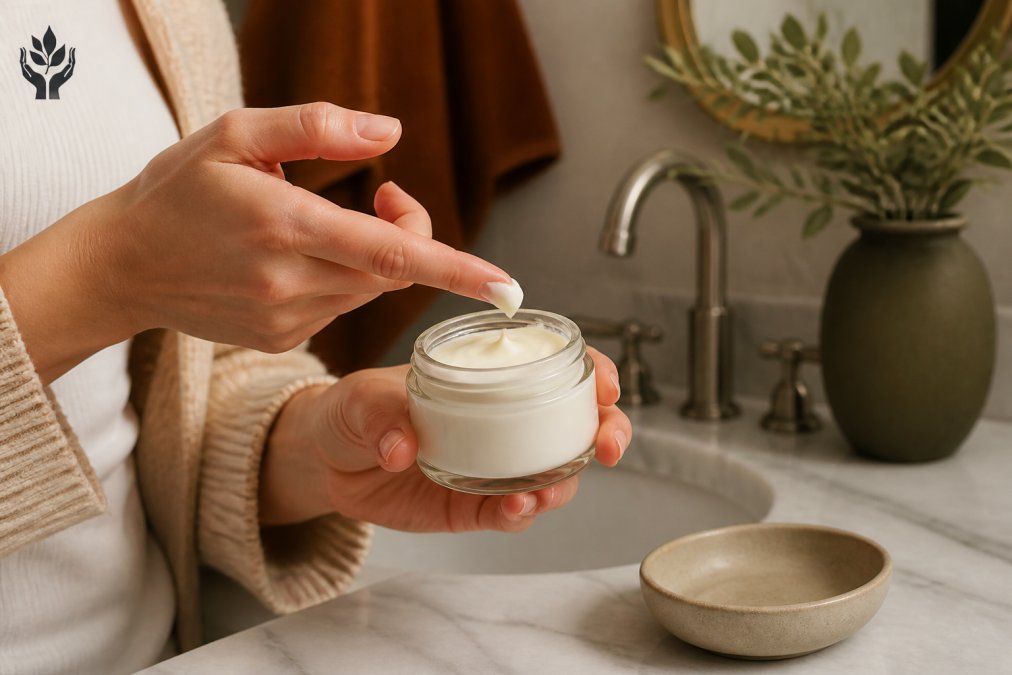
A simple daily rhythm:
- Cleanse gently with lukewarm water, never hot.
- Pat skin so it is damp, not dripping.
- Warm a pea-sized amount of balm between your fingers.
- Press it into face, hands and any dry patches.
- Apply at night for deeper absorption, or morning for a soft finish.
For very dry skin, apply a second thin layer after the first settles. For oily or combination skin, start with less and see how your skin responds over a week.
Present Body Co's whipped tallow balms follow this same idea. Each one is built on grass fed beef kidney suet tallow and organic apricot kernel oil, with nothing added that does not belong. The Frankincense Whipped Tallow Balm carries a warm, grounding scent that softens on contact. The Lavender Whipped Tallow Balm is the calm one, gentle enough for evening. The Unscented Whipped Tallow Balm skips fragrance and essential oils entirely, which makes it the one to reach for if your skin reacts easily.

Tallow and Active Ingredients: What to Pair and What to Avoid
A good balm can make your actives work better, or make them sting. The difference comes down to timing and how tallow seals the skin.
Tallow is an occlusive emollient. It forms a soft layer that slows water loss. That is wonderful on its own. Layered over a strong active, though, it can trap the ingredient against your skin and push irritation higher than you intended.
Here is how the common pairings shake out.
Retinol and retinoids. These speed up skin turnover, and the first weeks can leave skin dry and flaky. Tallow is a good partner here, but not on the same night at first. Use your retinoid, wait, then apply a thin layer of balm only if your skin feels tight. Once your skin adjusts, some people find they can layer balm over retinol without issue. Others never can. Test slowly.
Vitamin C. A morning vitamin C serum and an evening tallow balm is a workable split for most people. Vitamin C is water-based and tallow is fat-based, so they do not compete. If you want both in the morning, apply the serum first, let it dry fully, then press in the balm.
AHAs and BHAs. Glycolic, lactic and salicylic acids exfoliate the surface of the skin. A rich balm over freshly exfoliated skin can sting and redden. Use them on alternate nights, or apply the balm only on your off nights. If you do layer, wait at least ten minutes after the acid.
Hyaluronic acid and glycerin. These are humectants, they pull water into the skin. Tallow seals that water in. This is the pairing that works best. A light mist or hyaluronic serum under the balm gives it something to hold onto.
Niacinamide. Generally well tolerated alongside tallow. Apply the serum first, let it absorb, then balm.
A simple rule covers most of it: thinnest to thickest, water-based before oil-based, actives before balm. Wait a few minutes between layers so each one has time to settle.
One pattern worth knowing: tallow's occlusive layer can make a weak active feel stronger. If a product that used to feel fine now stings, the balm may be the reason. Pull it back for a week and see.
If you are new to tallow and already using a full routine, add it one step at a time. Introducing everything at once makes it impossible to tell what is helping.
Keep a simple note on your phone for the first two weeks. Jot down what you used and how your skin felt the next morning. Patterns show up fast, and they are easy to forget.
Frequently Asked Questions
Is tallow actually good for your face?
Tallow is rich in fatty acids that closely match your skin's own sebum, so it can soften dry skin and support the skin barrier. Many people find it deeply moisturizing without a greasy finish. That said, it is not a treatment for any condition. If you have acne-prone or reactive skin, patch test first and introduce it slowly.
Why do some dermatologists express caution about tallow?
Some dermatologists worry that tallow, being an animal fat, could clog pores or cause irritation in certain skin types. There is limited clinical research on tallow specifically, so caution is reasonable. If you have a diagnosed skin condition, talk to your dermatologist before adding any new product. For most people with dry or normal skin, tallow is well tolerated.
Is tallow better than retinol?
They do different things. Retinol is a vitamin A derivative studied for fine lines and skin renewal. Tallow is a moisturizer that supports the skin barrier and hydration. Some people use both, applying tallow balm after retinol to reduce dryness. If you are pregnant or nursing, avoid retinol and ask your doctor about alternatives.
What are the disadvantages of tallow for skin?
Tallow can feel heavy on oily or acne-prone skin. It may not suit everyone, and some people are sensitive to certain fatty acids. Sourcing matters too: low-quality rendered fat may contain impurities. Always choose grass fed, small-batch tallow from a trusted maker. If you notice irritation, stop using it and consult a dermatologist.